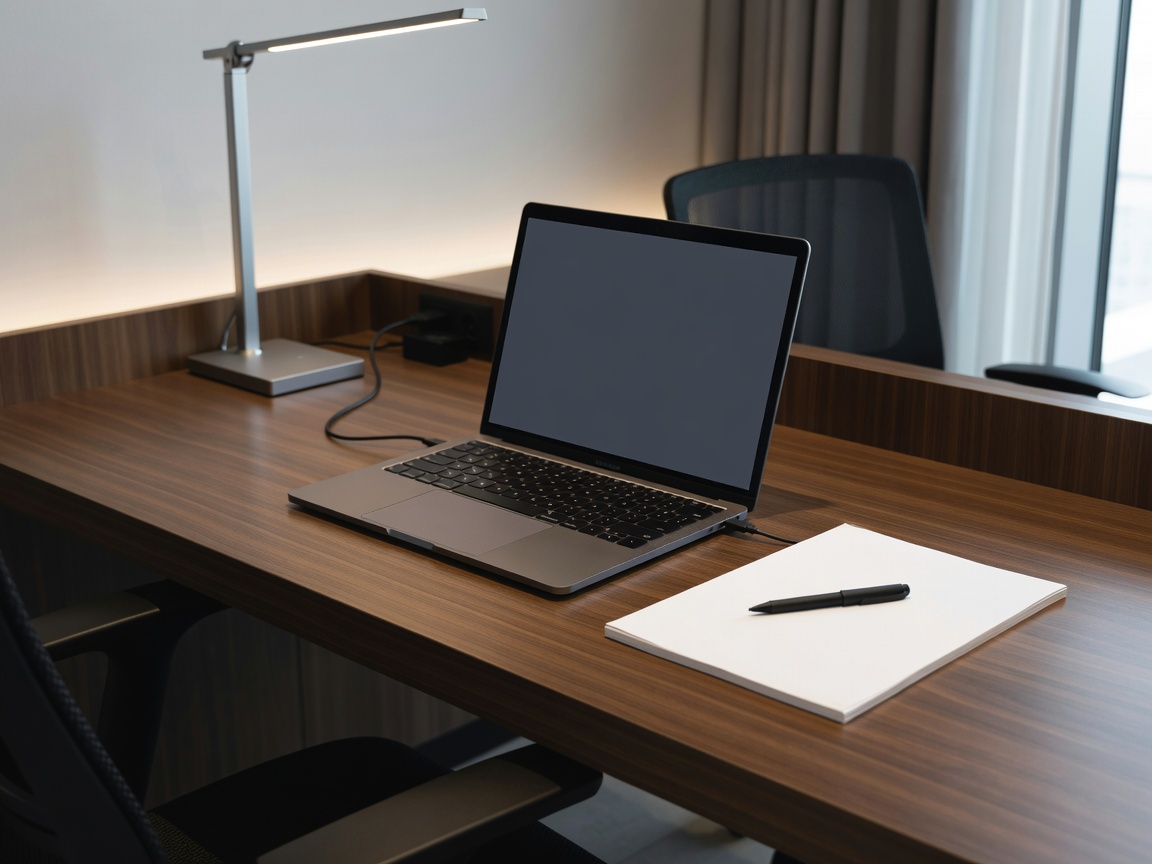
Workspace that supports the task
A desk is useful only if it suits the work planned. Consider whether you need room for a laptop and papers, a supportive chair, a lamp and convenient power. If you expect a video call, ask about internet reliability, room acoustics and whether the connection is suitable for your needs. The word “business” in a hotel description does not guarantee a particular desk, speed or power arrangement, so confirm details directly.
Workspace outside the bedroom can be valuable when one person needs to work while another rests, or when a task benefits from a larger table. Some properties may offer a lobby work area, lounge or meeting room; others may not. Check opening access, booking conditions, privacy and whether the setting is appropriate for confidential conversations. A public seating area is not a substitute for a private meeting room.
Connectivity and charging
Reliable internet access supports messages, documents and remote meetings, but coverage and performance vary. Ask whether access is included, how guests connect and whether there are any usage limits relevant to your work. If dependable connectivity is essential, prepare a backup using your own device and mobile connection where available. Avoid assuming that every room has the same signal quality.
Power access is a small detail with an outsized effect during a short stay. Check whether sockets are positioned near the work surface and whether charging ports are present if you rely on them. Bring the adapters and cables your equipment requires. In the room, a clear place to charge a phone and laptop can make the morning departure less of a scavenger hunt.
Meeting areas and business lounges
Meeting rooms are useful when a conversation needs privacy, a screen or a table for several people. Confirm the room’s capacity, equipment, booking method, availability and any charges with the hotel. Do not treat an advertised meeting facility as automatically included in the room stay. Business lounges are offered by some accommodation, but their access rules and services differ; establish whether a guest can use the space and during which hours.
If meetings are at a conference or exhibition venue, location may matter more than an in-house room. A hotel meeting room cannot remove a difficult transfer to the venue, and a well-placed accommodation may still lack suitable space for a work session. Compare the specific requirements with both the hotel’s offer and the route plan.
Breakfast, dining and luggage
Breakfast arrangements can shape an early start. Check when service begins, whether it is available on the days you need it and whether an alternative is offered for an early departure. Dining access matters after a late meeting too: identify food options within reach and confirm whether any on-site restaurant is open at the relevant time. Do not infer current hours or menus from a general hotel description.
Luggage storage can bridge the gap between checkout and a meeting, but it is a service to verify. Ask about opening times and collection arrangements. Reception availability is similarly important for late arrivals, early departures and unexpected delays. Confirm how the property handles arrival outside standard hours and whether the process requires advance contact.
Quiet, access and the journey beyond
Quiet-room requests may help, especially for light sleepers, but they cannot guarantee a particular outcome. Ask what options exist, and consider room position in relation to lifts, public areas or roads. Airport environments have activity at varied hours; sound insulation and a guest’s own needs can influence comfort.
Accessibility should be checked at each stage: route from transport, entrance, lifts, room layout and any facilities you plan to use. State specific requirements when contacting the accommodation, and request clear details rather than relying on a broad accessibility label. Transport information is another practical feature. A clear explanation of terminal access, airport railway stations, shuttle pickup points, taxis and nearby routes can turn an unfamiliar district into a manageable one.
For location trade-offs, read Airport Hotel Location. If your stay lasts only one night, Short Business Stays covers timing and luggage. Use the choosing guide to prioritise the facilities that matter to your itinerary.