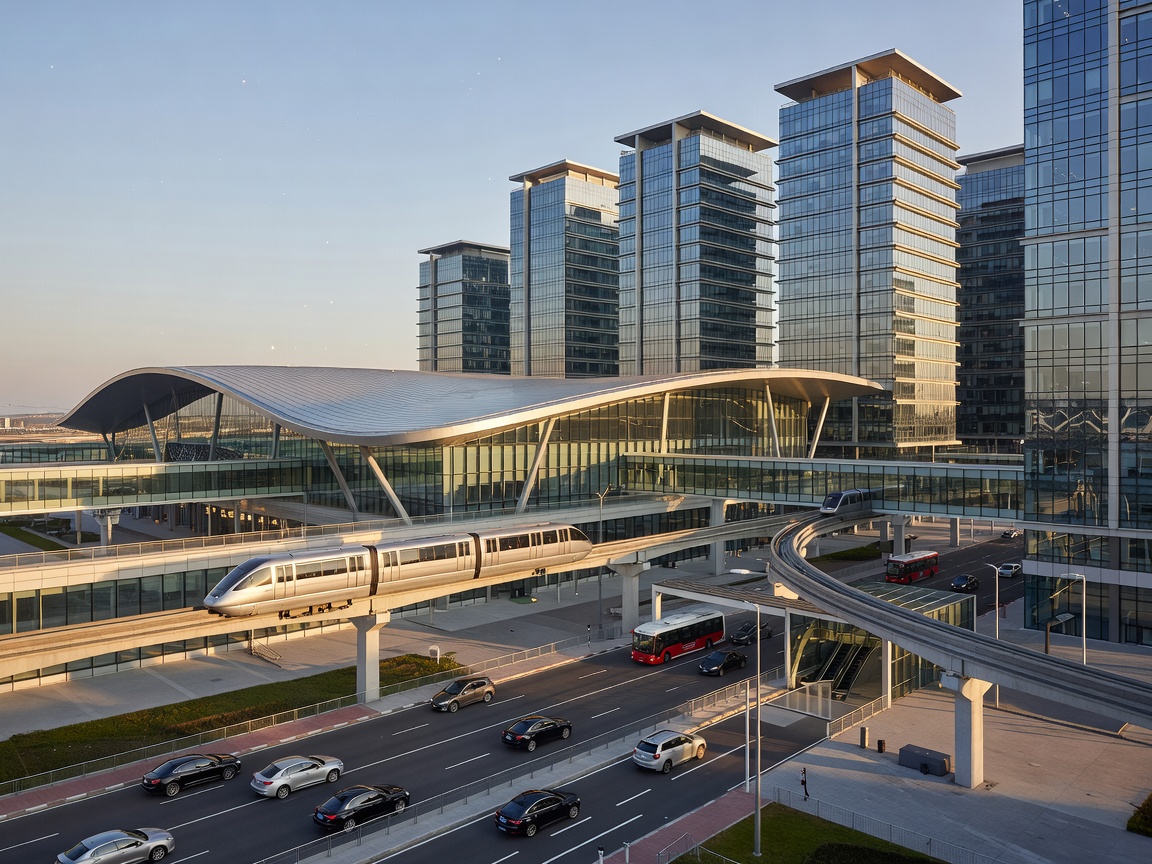
A business landscape around the runway
An airport business hub is best understood as a collection of linked places rather than one address. The terminal is one point; nearby hotels, office districts, conference facilities, restaurants and transport interchanges form a wider working area. For a traveller arriving late or leaving early, that network may make an airport-area overnight more useful than a stay deeper in the city. For someone whose meetings are in a central district, the same location may add an unnecessary cross-city leg.
Airport settings differ in how they meet the city. Some have direct connections into a major urban transport network. Others are surrounded by business parks or serve a broad commercial region where road travel remains part of the journey. Some have conference and exhibition activity nearby, while in other places the airport itself is the dominant interchange between rail, road and air travel.
Different hubs, different relationships
London Heathrow sits within the wider London region and connects with the capital’s transport network. Its business context extends beyond the terminal, with offices, commercial districts and meeting destinations distributed across the surrounding region. A hotel decision therefore depends on whether work is near the airport, in west London or elsewhere in the city.
London Gatwick is also connected to London and the South East, but its location south of the capital creates a different balance between airport access and onward travel. It may suit an itinerary focused on the airport or nearby commercial activity; a central London meeting calls for a separate assessment of the rail journey and its first and last legs.
Frankfurt Airport functions as a major transport interchange for a large commercial region. Rail connections, road access and proximity to the Frankfurt area make it a point from which business journeys can branch in several directions. Accommodation choices can serve airport activity, regional offices or meetings in the city, but those purposes are not interchangeable.
Amsterdam Schiphol has an airport railway station integrated with the wider Dutch rail network, linking airport accommodation decisions to Amsterdam and other destinations. Paris Charles de Gaulle is a large airport serving the Paris region, with rail links and commercial activity in its wider surroundings. In both cases, the airport can be a useful base for selected itineraries, while central-city work may favour a different location.
Munich Airport serves the Bavarian capital and its surrounding region, and Zurich Airport connects with the city and the broader Swiss transport network. Copenhagen Airport acts as an important transport gateway for the Danish capital region, while Dublin Airport serves the city and Ireland’s principal international air gateway. Each combines terminal access with its own city and regional connections; none can be reduced to a universal template.
Commercial areas and meeting venues
Hotels around airport districts may serve office visits, training, conferences or exhibition appointments as well as flight schedules. Check the actual address of the meeting venue, not simply its city label. A conference destination described as being near an airport may still require a road transfer or a local connection. Likewise, a business park can sit outside the comfortable walking orbit of a terminal hotel.
Restaurants, workspace and meeting rooms may be spread among separate buildings. Their presence in an airport district does not mean every hotel provides them. Treat each facility as a point to verify for the specific accommodation, and map the route between it and the place where work will happen.
Choosing by the shape of your trip
Start with the order of events: flight, meeting, overnight and onward journey. If the terminal is central to the plan, consider accommodation near it or its station. If a conference or office is the anchor, look for a location that reduces the journey to that address. If appointments are divided between the airport and city, compare the transport connections at each end rather than selecting by airport name alone.
For the physical trade-offs, continue to Airport Hotel Location. For one-night logistics, read Short Business Stays, or use the criteria guide to compare an airport base with a city-centre stay.